Episode 3
The Lost Colony of Roanoke
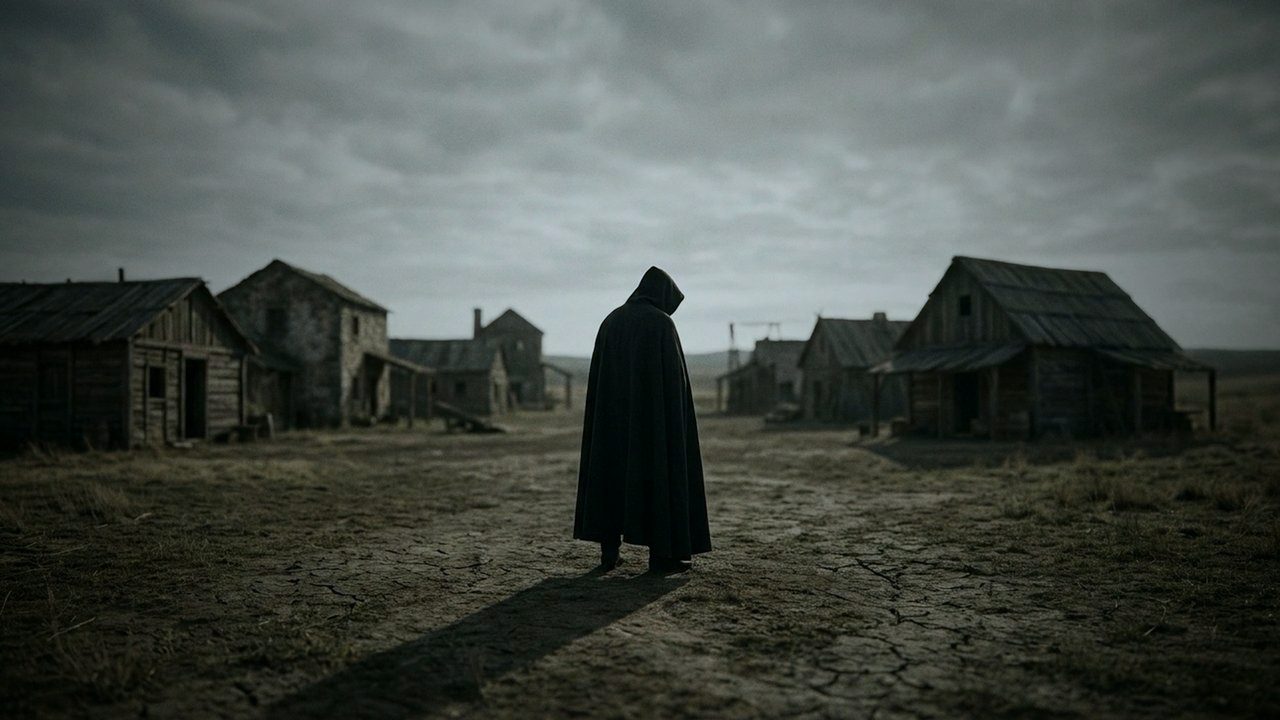
The water remembers what the world forgets.
August. Fifteen ninety. A man walks ashore on a thin strip of barrier sand off the coast of what we now call North Carolina, and he is looking for his granddaughter. He has not seen her in three years. He has crossed an ocean, survived a war, and been robbed at sea to get here. The houses are gone. The people are gone. And cut into the bare wood of a post, five feet from the ground, in what he will later describe as fair capital letters, is a single word.
This is the file on the Lost Colony of Roanoke — the settlement that vanished into one carved word. Let's separate the legend from what John White actually found, before the ink fades.
The Wrong Island
You already know the shape of this story — or you think you do. An entire English colony, men, women and children, there one moment and gone the next, leaving nothing behind but a sinister word carved into a post. No bodies. No blood. No explanation. Just the word, and the silence, and four hundred years of people staring at it. That version of the story is partly true and mostly wrong. The people did leave. The word is real. Everything else the legend gave you was invented by people who were never there.
Let us put the legend down and pick up the record. Because this story begins not with a haunting — with a business decision.
In fifteen eighty-four, Queen Elizabeth the First granted a charter to a courtier named Sir Walter Raleigh, awarding him the right to claim and settle land in North America on England's behalf. Raleigh himself never set foot on American soil. He financed the enterprise from London. The territory in his sights was the Outer Banks — a fragile necklace of barrier islands off what is now North Carolina — and behind them, a small, low-lying island called Roanoke. This was not a spiritual adventure. It was a commercial one, dressed in the language of empire, sharpened by rivalry with Spain.
An early reconnaissance in fifteen eighty-four made contact with the Algonquian-speaking peoples who already lived along this coast. Those first meetings were, for the most part, peaceful. Two Native men even agreed to cross the Atlantic to England and return — one of them, Manteo, from a people called the Croatan, whose home island lay south of Roanoke. Remember that name. Manteo threads through this entire story like a quiet voice in a crowded room, and he is the reason the ending is not the catastrophe you were promised.
But before the famous colony, there was another. In fifteen eighty-five, a military settlement was planted on Roanoke under a commander named Ralph Lane — roughly one hundred and eight men, soldiers and adventurers, no families, no roots. It lasted less than a year. Supplies ran out. Relations with the local Secotan people collapsed into violence. When Sir Francis Drake's fleet passed by in the summer of fifteen eighty-six, the survivors went home with him and did not look back. So when the second group arrived, they were not walking into promise. They were walking into the ruins of someone else's failure.
The colony this story is about arrived in fifteen eighty-seven. Its governor was a man named John White — not a military man, but a painter and a mapmaker, a careful observer by profession. With him came somewhere between one hundred and twelve and one hundred and twenty-one settlers. We do not have a precise count. Call it roughly one hundred and fifteen. And unlike Lane's garrison, these were not soldiers. They were families. Men, women — and children. The colony had been designed to grow. To last. To become something.
Their plan was not to stay on Roanoke at all. Their agreed destination was Chesapeake Bay, further north — a better harbour, better land, more room to build. But the ship's pilot, a Portuguese navigator named Simão Fernandes, set them down on Roanoke on the twenty-second of July and refused, flatly, to carry them any further. His reasons are not recorded. History gives us only his refusal and the result. Families who had crossed an ocean to begin again in Chesapeake found themselves deposited instead onto an island they had not chosen, in the wreckage of a settlement that had already failed once, with the man who was supposed to take them onward already turning his ship around.
It was on this wrong island, in this unplanned place, that the most quietly extraordinary moment of the whole story occurred. On the eighteenth of August, fifteen eighty-seven, John White's daughter Eleanor — married to a colonist named Ananias Dare — gave birth to a daughter. They named her Virginia Dare. The first English child born in the Americas. John White's granddaughter. A few days after Virginia arrived, another child was born — a baby of the Harvie family, whose name we do not know. New life. A doomed island. A colony that could not yet know that no one was coming to save them.
Within a fortnight of Virginia's birth, the colonists made the decision that sealed everything. They were low on supplies. They needed England. And the person they chose — or pressed, or persuaded — to make the crossing was their governor. The painter. The new grandfather. John White did not want to go. He went. And before he left, the colonists agreed on a signal. A contingency code, for the thing they all knew might happen while he was away. What that signal said is the key that unlocks the whole mystery.
The Colony That Made a Plan
Here is the most important thing in this whole story, and almost no one who tells the ghost version ever mentions it. The settlers of Roanoke expected that they would move. They planned it. They set up a procedure for it — loud and in plain sight — before John White even sailed.
Listen closely, because everything turns on this. The agreement was simple. If, while White was away, the colony needed to leave Roanoke — to relocate, for whatever reason — they would carve the name of their destination into a tree or a post, so that White would know exactly where to find them when he returned. And there was a second part to the code. A darker part. If the departure was not orderly — if they were driven out by danger, by violence, by some emergency not of their choosing — they would carve a cross above the name. A name alone meant a calm, planned move. A name with a cross above it meant trouble. Two meanings. One difference. The mystery of Roanoke collapses entirely once you know this, and yet the legend has spent four hundred years pretending it doesn't exist.
John White sailed at the end of August, fifteen eighty-seven. He left his daughter. He left his granddaughter, nine days old. He left a hundred-odd people on a sandbar in the Atlantic, and he carried a promise to come back quickly. He could not have known that quickly would become three years.
Because the moment White reached England, history closed a fist around him. England and Spain were at war, and in fifteen eighty-eight that war reached its crisis — the Spanish Armada, the great invasion fleet, two hundred ships bearing down on the English coast. Every vessel that could carry a cannon was seized for the defence of the realm. Including White's. A man whose granddaughter was on a sandbar across the Atlantic could not buy, borrow or argue his way onto a ship. His entire country was bracing to be invaded.
He tried anyway. He found two small ships and set out in fifteen eighty-eight. They were privateers — more interested in plunder than in rescue — and on the crossing they were themselves attacked and robbed. The ships turned back. White had not reached the open Atlantic. He had set out twice toward his family, and twice the world had thrown him back onto the same shore. Three years. That is the real cruelty under this story — not a supernatural night, but a slow, grinding accumulation of wars and storms and stolen ships and a grandfather pacing foreign harbours while the seasons turn. Nothing happened fast here. The only thing that happened fast was the forgetting, afterward.
When White finally secured passage, it was fifteen ninety. He arrived on the seventeenth and eighteenth of August — the day before and the day of Virginia Dare's third birthday. He climbed back onto the island where he had last held her. And he found a silence three years deep.
The Sign Without a Cross
So let us go ashore with John White and look with his eyes. Not with the eyes of the movies. With the eyes of the one man who was actually there, who wrote it down, and whose account is the only primary source we have.
The settlement was empty. But it was not destroyed. This is the first thing the ghost story gets wrong, and it gets it badly. The houses had not been burned or smashed. They had been taken down. Dismantled, methodically, board by board. And in the space where they had stood, the colonists had erected something new — a palisade of upright tree trunks, a defensive wall, enclosing the cleared area like a small fort. People who are dragged away screaming do not pause first to demolish their own houses and build a tidy enclosure. This was the work of people with time and a plan. The aftermath of a project, not a panic.
And then White saw the word. On one of the main posts of the palisade entrance, about five feet from the ground, the bark had been stripped away. And into the pale wood beneath, in what White himself called fair capital letters, was carved a single word: CROATOAN. On a nearby tree, cut shallowly into the bark, were three letters: C — R — O. The beginning of the same word, begun and abandoned, as if someone had marked it in passing and finished the thought elsewhere.
Now. The legend wants CROATOAN to be a curse. A dying word. An unanswerable riddle. But John White did not read it that way, and John White was the one person alive who had agreed in advance on what it meant. Croatoan was not a mystery. It was a name. The name of a real island to the south — what we now call Hatteras Island — and the name of the people who lived there. Manteo's people. The Croatan, who had welcomed English visitors, who had sent Manteo to England and received him back, who were the closest thing this lost colony had to trusted friends on a hostile coast.
Put yourself in that grandfather's shoes for a moment. He has crossed an ocean expecting the worst. He has prepared himself for bodies, for burned timber, for blood. And instead he finds a dismantled settlement, a neat wall, and a name. The name of friends. The name of the one place on this coastline where his daughter and his granddaughter would be safe. He was not horrified. He was relieved.
And here is the detail that determines everything. The single most important fact in this file. The carved word had no cross above it. No cross. Remember the code. A name meant a calm, deliberate move. A cross above the name meant distress, danger, force. The colonists had carved their destination in plain letters, and they had deliberately left off the sign of trouble. They were telling White, in the only message they could leave — we have gone to Croatoan, and we have gone willingly. No one is forcing us. Do not be afraid.
White recorded his own reaction, and it is the most overlooked sentence in this entire story. By his own account he greatly rejoiced to have found a certain token of their safe being at Croatoan — the place, he wrote, where Manteo was born. Read that again. The man who lost his family did not write down horror. He wrote down hope. The dread in this story was added afterward, by generations of storytellers who found the truth too quiet for their purposes.
What of the bodies the legend promises? The blood? The marks of violence? There were none. No graves. No bones. No blood. No sign of a struggle anywhere on the site. The only damage White found was to his own belongings — chests he had buried for safekeeping three years earlier, dug up and ruined, his maps and armour corroded by the weather. Things destroyed by time, not people destroyed by violence. A looted cache — not a graveyard.
Lay the scene out whole and look at it. Houses taken down with care. A new wall constructed. A destination carved in calm, clear letters. The agreed sign of distress deliberately absent. No dead, no blood, no battle. The governor himself rejoicing rather than weeping. This is not the scene of a vanishing. It is the scene of a forwarding address. The colonists had not been erased. They had moved, exactly as planned, to the home of their friends. And all John White had to do was sail a short distance south to Croatoan and knock on the door. He never made it.
The Storm That Kept a Grandfather
White stood in the empty settlement with the answer in his hand. Croatoan. Manteo's island. A short sail to the south. His family was, by every sign he had been trained to read, alive, and nearby, and findable. All he needed was a few more days of navigable weather.
The weather refused him. As the ships prepared to make the short passage south, a storm rose — a gale building toward hurricane force off the Outer Banks, the treacherous coast that sailors would later nickname the Graveyard of the Atlantic. In the chaos the ships lost their anchors. Cables snapped. Without anchors, running low on food and water, driven toward a coast of hidden sandbars in rising wind, the captains made the only decision they believed they could survive. They turned away. Out into the open Atlantic. Away from Croatoan. Away from his family.
Sit with what that means. John White had crossed an entire ocean. He had survived a war and a blockade, a robbery at sea, three years of helpless waiting. He had climbed back onto the island where he last held his granddaughter and found, against every fear, a message that said — we are safe, we are here, come and find us. And then a storm took him away. With the answer already in his hand. He was, in the cruelest geometry of this story, close enough to read the address — and never close enough to use it.
He intended to return. Of course he did. But once the ships were bound for England, the door closed for the last time. White was an ageing man with no money, no fleet, no patron willing to fund another Atlantic crossing. Raleigh's attention had moved on. England had newer wars. The colony on the sandbar was, to everyone but one old painter, a sunk cost on a far shore.
John White never saw America again. He retired to Ireland and died there around fifteen ninety-three — within a handful of years of that last storm — without ever learning what had become of his daughter, his granddaughter, or the families he had last seen standing on a beach at the end of August, watching his ship grow small on the horizon. He had carried the answer in his own hands. CROATOAN. And he died with that word still unanswered.
And so the colony became lost — not in fifteen ninety, when its people calmly and deliberately moved, but later, when the one man who knew where to look ran out of time and ships and hope. They were not lost to themselves. They were lost to us.
For more than four centuries, people have tried to fill that silence. Some filled it with horror — ghosts, massacres, a word cut into wood like a final scream. None of that is in the record. But there are others who have filled the silence with something quieter, and considerably more honest. Not a vanishing at all. An ending so ordinary that the legend has never forgiven it.
The Verdict
The last pages of this file are left blank — for the verdict. We will likely never recover a single clean answer for the colonists of Roanoke. The strongest reading of the evidence is not a thunderclap — it is a slow dissolving. Roughly one hundred people, realising no rescue ship was coming, splitting and folding, over years, into the Native communities around them. Weigh these theories, then, not as rival disasters, but as different answers to one quiet question: into which lives did they disappear?
Theory one: they divided and were absorbed — 45%
The colony split — some group toward Croatoan with Manteo's people, others moving inland to join neighbouring Native communities — and over time their English identity dissolved into the lives that took them in. This is the mainstream of modern historical scholarship. It fits the carved sign, the absent cross, the dismantled houses, the plain arithmetic of people without a supply ship and with willing neighbours. Against it: it produces no single dramatic grave to stand in front of.
Theory two: the main group went to Croatoan — 25%
A sharper version of the first — that the bulk of the colony did exactly what the post said, went south to Manteo's Hatteras Island, and lived there among the Croatan. And here the ground itself has begun to speak. On Hatteras, archaeologists including Mark Horton and Scott Dawson have spent more than a decade digging and have drawn English objects out of the soil — pieces of a sword, rings, fragments of guns, writing tablets — sitting in the same earth layer as Native pottery. Against it: trade routes could move English objects without English people, and the DNA work has not yet passed peer review.
Theory three: part of the group was later killed by Powhatan — 15%
Around sixteen twelve, an English writer named William Strachey recorded a secondhand account — that the powerful chieftain Powhatan had boasted of destroying a group of Roanoke colonists shortly before the Jamestown settlers arrived. For it: it is the favoured thesis of the historian David Beers Quinn. Against it: it is hearsay, a boast passed through a chain of mouths and filtered through a political moment.
Theory four: they went inland, to a place researchers now call Site X — 8%
On John White's own map of the region, researchers found a fort symbol hidden beneath a paper patch — concealing a marked location inland near Salmon Creek on the Chowan River. The First Colony Foundation has excavated there and found Elizabethan-era English pottery. Against it: the evidence suggests a small advance party, not the whole colony.
Theory five: they tried to sail home and drowned — 4%
That the colonists, despairing, put to sea in their small vessel and were lost on the Atlantic. Against it: nearly everything found on the island argues against it — the palisade, the calm, deliberate, crossless sign pointing south to friends.
Theory six: the Spanish found and killed them — 3%
Spain and England were at war, and Spanish ships did search for English settlements on this coast. Against it: the Spanish searched and never found Roanoke — there is no record on either side of any such attack.
Lay the cards on the table. The most likely truth about the Lost Colony of Roanoke is not a horror story. It is almost the opposite of one. A hundred-odd abandoned people, realising that no ship was coming, did the sane and human thing. They left the wrong island. They went to the friends they had. And over the slow years that followed, they ceased to be a separate English colony and became part of the people who received them.
If you ask me: CROATOAN was never a curse, never a cry, never a riddle. It was an address. A calm, deliberate, carefully carved address, left by people who fully expected to be found. The tragedy of Roanoke is not that the colonists vanished. The tragedy is that the one man who could read their address was driven off the coast by a storm, and died in Ireland three years later — with that single word still in his hands and nowhere left to go.
About one hundred and fifteen people remain: Eleanor Dare. Ananias Dare. And the first English child born in this new world — Virginia Dare, who, if the kindest reading of the evidence is true, grew up under a different sky, among people who knew her name and kept it, and never knew she was a mystery that four centuries of people could not solve.